American Transcendentalism
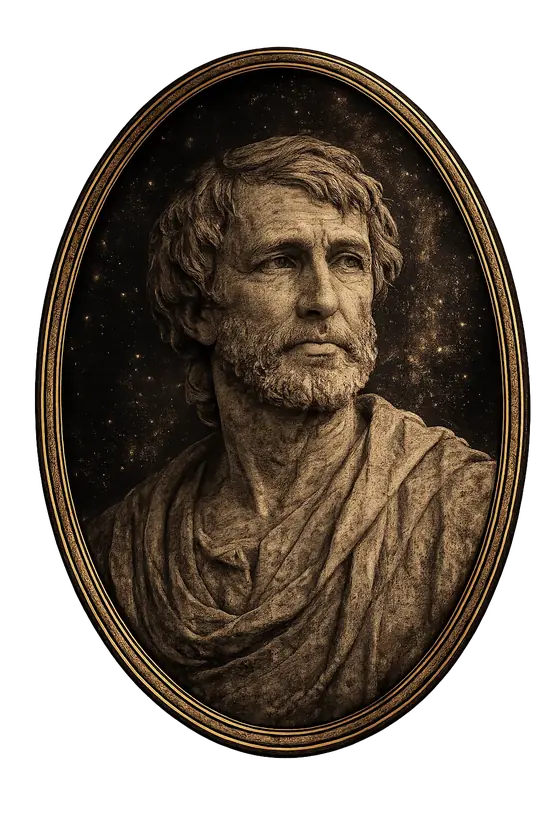
Henry David Thoreau
The Woodland Dissenter
- Born
- 1817
- Died
- 1862
- Region
- New England — United States
- Vocation
- Essayist, naturalist, surveyor
Thoreau built a cabin at Walden Pond, lived two years by his own labor, refused to pay a tax that funded slavery and war, and wrote a book that has taught generations how to sit still and how to stand up.
Life
Born in Concord, Massachusetts, Thoreau graduated from Harvard, taught briefly, then apprenticed himself to Ralph Waldo Emerson and to the woods. In 1845 he moved to a cabin on Emerson's land at Walden Pond.
For twenty-six months he lived deliberately — hoeing beans, keeping a journal, receiving visitors, walking the woods. He was jailed for a night for refusing his poll tax; the essay that followed, Civil Disobedience, would later shape Gandhi and King.
Core Themes
Timeline
1817
Born in Concord
Massachusetts, in the family pencil-making household.
1837
Graduates Harvard
Refuses to pay for a diploma; famously says 'let every sheep keep its own skin'.
1841
Joins Emerson's household
Lives with the Emersons; becomes part of the transcendentalist circle.
1845
Moves to Walden
Builds a cabin on the shore of Walden Pond on July 4.
1846
A night in jail
Refuses his poll tax over slavery and the Mexican War; is briefly imprisoned.
1849
Civil Disobedience
Publishes the essay that will travel to Tolstoy, Gandhi, and King.
1854
Walden published
Nine years and seven drafts after leaving the pond.
1862
Death from tuberculosis
Dies at forty-four, reportedly serene; his last audible words: 'moose' and 'Indian'.
Places
The map of a life — ancient and modern.
Concord
Concord
Today: Concord, Massachusetts
The village that was his whole world.
Walden
Walden Pond
Today: Walden Pond State Reservation, MA
The kettle-hole pond of his experiment in living.
Major Works
Memoir and philosophy · 1854
Walden
A record of two years, two months, and two days by the pond — and a lifelong argument for a life worth having.
No free public edition found yet
Essay · 1849
Civil Disobedience
On the individual's right — and duty — to disobey unjust law.
No free public edition found yet
Personal journal
Journal
Two million words kept from 1837 to his death; one of the great documents of American attention.
No free public edition found yet
Voices of the Guide
"I went to the woods because I wished to live deliberately.
"The mass of men lead lives of quiet desperation.
"That government is best which governs least.
"Our life is frittered away by detail. Simplify, simplify.
"It is not enough to be busy; so are the ants. The question is: what are we busy about?
Influence
Influenced by
- emerson
- confucius
- bhagavad-gita
Who they influenced
- gandhi
- king
- muir
Modern Impact
Why this guide still matters today.
- Founding text of American environmentalism
- Charter of nonviolent civil resistance
Related Council Members
Legacy
Thoreau made a cabin, a pond, and a night in jail into an argument that has not stopped ringing.