Neoplatonism
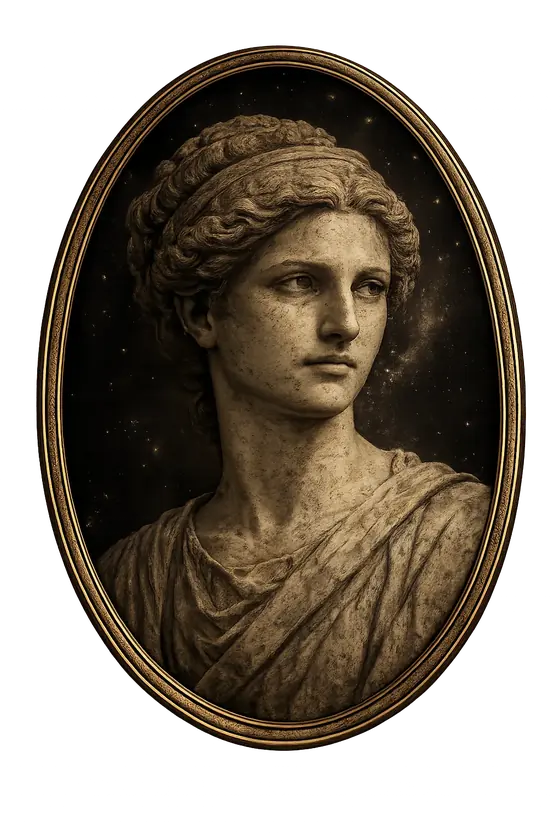
Hypatia of Alexandria
The Philosopher of Light
- Born
- c. 355 CE
- Died
- 415 CE
- Region
- Roman Egypt — Alexandria
- Vocation
- Mathematician, astronomer, philosopher
Head of the Neoplatonic school in Alexandria, Hypatia taught geometry, astronomy, and philosophy to Christians and pagans alike. She stands as an enduring symbol of reason and intellectual courage.
Life
Daughter of the mathematician Theon of Alexandria, Hypatia grew up in the great library city as it entered its final century of glory. She became the last known steward of a lineage of learning that stretched back to Euclid.
She lectured publicly on Plato and Aristotle, corresponded with statesmen, and was consulted by governors. In an age of intensifying religious violence, she refused to abandon philosophy for any dogma — and was ultimately murdered by a mob for it.
Core Themes
Timeline
c. 355
Born in Alexandria
Raised in the household of the mathematician Theon.
c. 380
Studies abroad
Some sources place her in Athens, absorbing the late Platonic tradition.
c. 390
Head of the Neoplatonic school
Succeeds her father as the leading teacher of philosophy in the city.
c. 400
Public lectures
Draws crowds of Christian and pagan students; correspondence with Synesius of Cyrene begins.
c. 410
Political counsel
Advises the prefect Orestes; caught between civic and church authorities.
March 415
Martyrdom
Murdered by a mob during Lent; her death is mourned as the end of an age.
posterity
Symbol of reason
Later revered by Enlightenment thinkers as a martyr of free inquiry.
Places
The map of a life — ancient and modern.
Alexandria ad Aegyptum
Alexandria
Today: Alexandria, Egypt
The Mediterranean's greatest city of learning.
Great Library
The Mouseion
Today: Alexandria, Egypt
The intellectual heart of the ancient world in its twilight.
Major Works
Mathematical commentary
Commentaries (lost)
Works on Diophantus, Apollonius, and the astronomical canon — surviving only through references.
No free public edition found yet
Voices of the Guide
"Reserve your right to think, for even to think wrongly is better than not to think at all.
"Truth is truth, though it be told by an enemy or heard by a fool.
"Fable should be taught as fable, myth as myth, and miracles as poetic fancies.
On sourcing · None of Hypatia's own writing survives. These lines come from Elbert Hubbard's Little Journeys (1908), a fictionalised life, and have circulated ever since as her words. We keep them because they express what she is remembered for, but they are not historical quotations.
Influence
Influenced by
- socrates
- plato
- plotinus
Who they influenced
- synesius
- later platonists
Modern Impact
Why this guide still matters today.
- Symbol for scientific freedom
- Studied in histories of women in mathematics
Related Council Members
Legacy
Hypatia became, in memory, the last philosopher of antiquity — a woman who insisted on thought when the world demanded allegiance.